Showing posts with label transparency. Show all posts

Jul 12, 2017

Designing an Organization

In software development there's a common phrase that you should employ the best people, treat them well and get out of their way. What is many times forgotten is the fact that even the best people need direction.

Photo by Rachael Gorjestani on Unsplash

If I think about a company/department/any organizational unit, I'd like to know what is its goal. (One could maybe also call it a Vision.) What is it trying to achieve? What is the purpose for having such unit? It's not mandatory, but beneficial, if the purpose for existence is noble or somehow larger than an individual.

Once you have found your purpose, share it with everyone. Talk about it continuously. Make it clear for all who are involved. Next, think about what matters would be needed to pursue the shared vision. What kind of organization would be most capable? What roles should different people take?


Then staff the organization. For each person, make it clear what is their purpose. How do they help in reaching the common goal? Do it in a transparent way so that others will also understand. Now you can let the magic happen. If you are in an expert organization, each person should know best what they should do. Or at least better than their bosses.

And don't think you're done. You will never be. Even if you don't like it, the world around you changes. You will need to adjust your goal. And your organization. Rinse and repeat.

Photo by Ryan Riggins on Unsplash

Oct 30, 2014

Using Scrum for Strategy Work

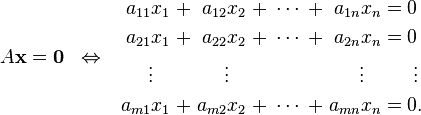
I'm continuing with the same subject I wrote about last week. Repetition is key to learning. And another important way to make things stick is to tie new information to previously obtained knowledge. At university I noticed the same thing with equations, groups of equations, matrices and linear operators (and functionals). Once you study enough maths you see how beautifully many things are connected...


But getting back to the point. I'm participating in our strategy work. Probably going into details about it would be wrong in so many ways that I won't even consider such option. But I think the (Agile) process how we are producing the new strategy is so interesting that I'd like to share it.


One way to produce a new strategy is to assign the task to a couple of persons. Then they spend some time (X months) to gather data and make relevant analyses and present resulting strategy to CEO and/or Board. Then the strategy might be accepted or some modifications are requested. Process is effective, because the people working on it don't need to negotiate much and they can move fast. On the other hand, the result is produced by the mental energy of only a couple of people. And these are also the only people who know the new strategy at the beginning.


In our case the work is split into work streams. Each work stream has an Owner, a Facilitator and a dedicated team. Teams produce their own piece of the general strategy puzzle, but they need to make sure they are aligned with the other work streams. This is achieved via cross-team communications (which is always non-trivial) and facilitated through weekly Facilitator Calls. Teams also have regular sessions when they all meet, present their current findings, challenge each others current results and generally push each other forward. This is also a session that feeds the overall strategy which will be the crystallized result of all the combined efforts.


If you have used Scrum with multiple teams you might spot some similarities. I think the work stream structure is a one-to-one match with a Scrum Team. It contains (Product) Owner, Facilitator (Scrum Master) and a (Development) Team. The Facilitator Calls are like weekly Scrum of Scrums sessions that are used for cross-team synchronization. (Of course this close relationship with Scrum is not that much advertized.)


I can't think of a good Scrum match for the session that combines the results of the different work streams, but there's one in SAFe model. These regular sessions bring to my mind System Demos. All in all the work is like traveling on board an Agile Release Train. The end result will be full-fledged strategy that is already well understood by the people who have been crafting it. And although this probably costs the company a lot more in the short term than a strategy crafted by only a couple of persons, I think it's a clever investment. If we have N work streams with M members, it totals N x M people who are already quite familiar with the new strategy. I think that is already a really nice sized Guiding Coalition.


And maybe still one thing that I want to add (because I'm so proud of it): the strategy process is out there in the open! Not in the basement, nowhere lurking in the darkness. Anyone is free to give input. People are encouraged to discuss and even the meetings are held in open space. Transparency. A cornerstone in Scrum. To me it signals trust.


Jul 17, 2014

Bullying

This post was inspired by a situation I witnessed at the local lakeside (I'm on vacation). Two boys of about the age of ten were playing by the lake. Another pair of about the same age girls were swimming in the lake. Suddenly one of the boys threw the other one's shoes into the water. Then he kept saying that "go and fetch them before they drift too far." Well, they drifted too far. Both of the boys had their clothes on and weren't very keen to get into the water. Then they tried to get the girls, who were swimming, to fetch the shoes. There was plenty of bargaining, but in the end I asked my four-year-old to fetch the shoes with her float.

Later we witnessed the bully trying to push the other one to the lake and in addition throw his shirt and pushing his bicycle there also. He also managed to somehow make a small wound into the other one's hand. When they were about to leave they had a conversation about what the bullied one would tell home about the wound. I didn't hear the conversation well, but this was the only time the bully was feeling a bit uneasy. When they left, he made the final favor of kicking the other one's bicycle helmet around.


I feel ashamed because I didn't stop this. We merely said to them that that doesn't seem like a nice way to treat people nor equipment. But for the most part we just watched silently how this cruel play happened. Inside I felt like I would like to throw the bully into the lake and ask the other one why he thinks this guy is his friend anyway. But I didn't.

The scene reminded me of this video I had seen earlier:


Fortunately this isn't everyday life at workplaces (hopefully). Management is responsible for the well being of employees. This also means that management must stop this kind of abusive behavior right away. Doing this isn't easy or comfortable and most people will evade intervening like I did in this case. But it is the role of the management to do it.

When I was thinking about possible remedies for this I first came up with transparency. Usually the bullies try to work in secrecy. Out in the open the bullying is a lot harder. But in the particular case of these two boys I would just recommend ditching that other guy. No-one deserves to be treated that way. And most certainly not by a "friend". If the same happened in a (work) relationship, I would recommend doing the same.

For me personally the scene served as a chance to educate my own children about the real world. Everyone doesn't always play nice. But it's good to identify the persons and situations and hopefully be able to handle those if the time comes. Unfortunately I also demonstrated that grown-ups aren't always much of a help either. I need to shape up on this when my kids go to school..