Nov 16, 2015

SLUSH 2015

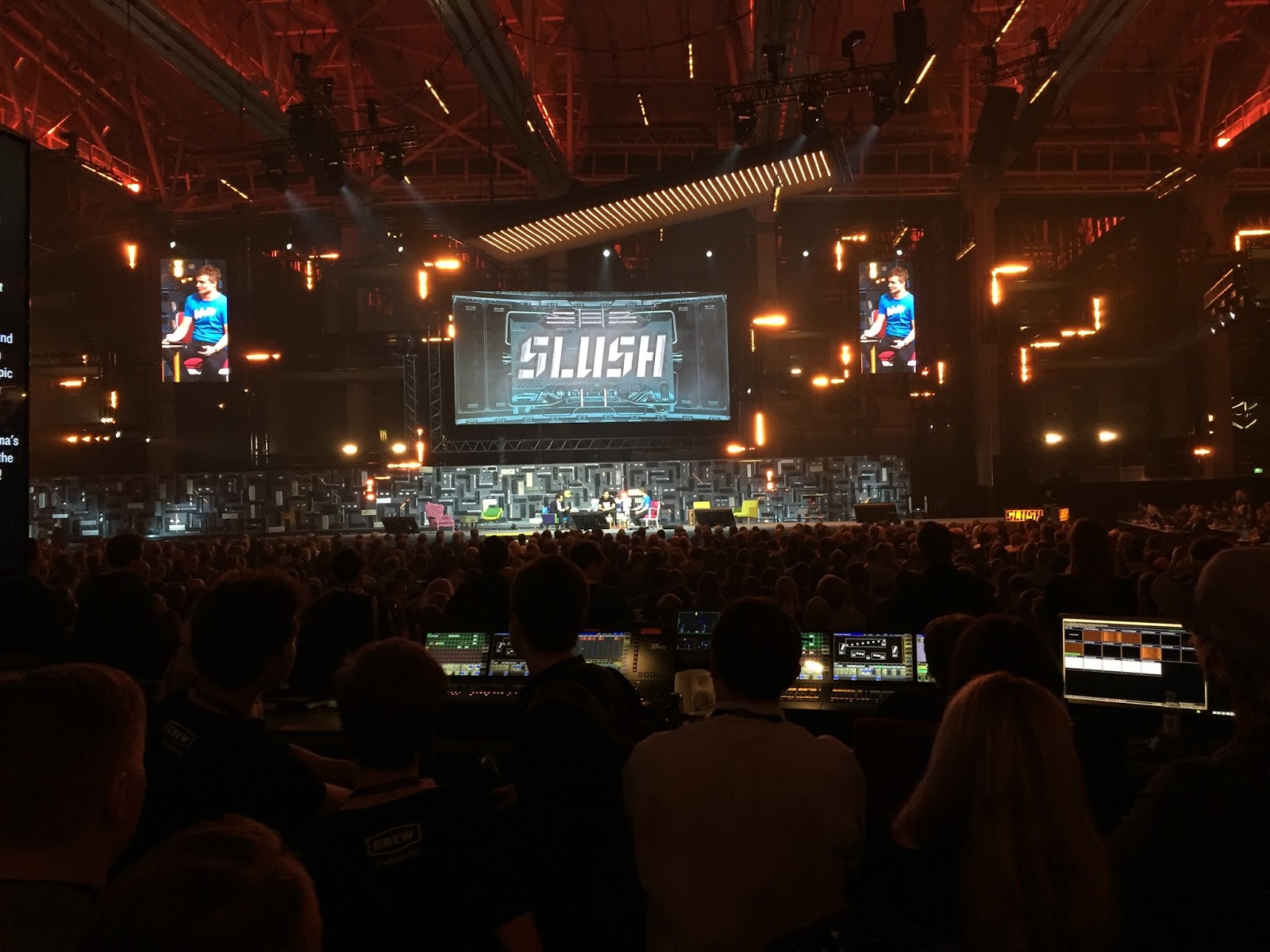
If you are not familiar with SLUSH, it's a sort of a startup event. Or I guess at least originally the idea was to gather together startups and investors. And it's still a lot about that, but it has expanded into something huge. Not only startups are interested in being there, but also many established not-anymore-startups like NOKIA, Samsung, GE or F-Secure. Also the set of speakers includes people like former president and Nobel price winner Martti Ahtisaari, president of Estonia and prince of Sweden.

The size of the ~2 day event was around 15k attendees. I included the approximation sign, because two days is far from the whole truth. During, before and after SLUSH the Helsinki region is filled with all sorts of side-events. So it's actually a really great situation to have a product launch. I think at least Comptel, Nokia and F-Secure took advantage of the situation.


I participated in SLUSH as a representative of my company. We were not looking to sell the company, nor to acquire any others. But we are included in the Merit Project along with other Finnish maritime companies. So we had an own stand alongside Eniram, Arctech, Ixonos, Aeromon and others. Honestly there weren't many potential customers, but the emphasis was in trying to suck the most out of the inspiring atmosphere. :)


In the beginning everything was rather shocking. Dim lights and huge laser beams crossing the ceiling. So many companies represented that one got disoriented almost right after stepping in. And due to the fact that I represented my company at the stand and because the event all in all was huge, I didn't watch many of the presentations. But I can recapture some that were most memorable to me.


Risto Siilasmaa told about NGP, Nokia Growth Partners. It's a 700M$ venture capital. Now I have to admit that I'm not that familiar with venture capital companies, but my impression was that they most give 'just money'. Interesting in this NGP concept was that in addition to the investment they also offer a lot of their own contacts, experience and wisdom to the startups. That might be a huge advantage compared to 'just money'.


Then I watched Dyan Finkhousen from GE talk about Open Innovation. I think it was Lean Startup where I read about GE's approach to having separate units that are fully autonomous. They can operate in the new environments without the inertia of the big company. But on the other hand they can also benefit from the 'big shoulders'. I think that's really interesting. There are other similar examples about these sort of intrapreneurs. From Finnish companies Reaktor Ventures is operating similarly.


Ilkka Paananen told that the bar of success has raised significantly during the last five years. Before Angry Birds it was huge to get million downloads. Now with hundreds of millions or billions of downloads it's hardly worth mentioning. He also got big applause for saying that he believes the next Google could come from Finland.


I'm not sure if that is likely, but the atmosphere of SLUSH was such that anything could be expected to happen. I guess many startups could find their investors from the event, but for me it was a source of great inspiration. You are allowed to think big, currently there's venture capital for good ideas and there are no limits. Digitalization is regardless going to happen and it's going to change everything.

(In addition to following the official program I did get some low-quality selfies with various people I admire. One I missed... Daniel, the Prince of Sweden, maybe next time. :) )

Nov 3, 2015

From Forecasting to Cycle Time

I like measuring for the sake of improvement. I believe that measuring something helps to understand its nature. And by measuring you might learn if something is good or bad and going to positive or negative direction.


We have been using so called forecast hit-rate to measure how well the Scrum Teams are able to predict their velocity. It's the result of dividing planned number of Story Points with the actually realized number of Story Points for a Sprint. But in case the number of stories is small, there's easily large deviations when things don't perfectly as planned. And usually things don't go perfectly as planned.

Also this measure can result in some rather nasty dysfunctions. Teams start to favor keeping the forecast instead of trying to maximize the amount of customer value in a Sprint. Or even though some Story becomes obsolete it isn't dropped because that would flaw the statistics. This isn't nice.


We use Atlassian JIRA and JIRA Agile for our Backlogs and Scrum boards. (I guess I should start calling it JIRA Software soon.) It offers a handy Velocity Chart where one can follow these planned vs. completed results. This is essentially the source of our forecast hit-rate information.

But due to all the possible events that affect the Scrum Teams and the #NoEstimates movement that gains momentum also in our company, the data has a really high variance. Even after couple of years it shows no signs of stabilizing. (Of course it can argued that is a systemic dysfunction. As it is. But let's not go there.)


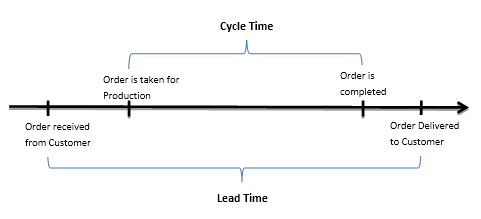
Another tempting alternative for this metric that I've been thinking about is Cycle Time. Average time that a Backlog item takes between the start of work until it is completed. Let's assume that such metric would be easily available and that there would be target on it or that management would follow the number. What kind of behavior would this drive?


My assumption is that it would make the Stories smaller. That teams would strive to get things done faster instead of having mammoth size stories. So In the end there would be a bigger number of smaller Stories and tasks that could be made in shorter time. I would like that. Also it would fit nicely with #NoEstimates.

Since this is still simply hypothetical, I don't have any results yet. But this is an experiment that I'm about to try.


Oct 28, 2015

Jogging Meeting

I have an impression that walking meetings are currently all the hype. Because everything should be always tested before judging, I decided to give it a spin. But why settle for a walk if you generally move faster?

So we decided to go for a jogging meeting with one of my team mates. I know he's an active runner and I too occasionally enjoy going for a run. And we have one-on-one meetings biweekly anyway.


When clock hit 2 PM we went to staff changing room and took the elevator down. Fortunately my team mate had been smarter than me and thought of a good route before hand. I had just thought about it, but didn't ever have time to do that. As one can guess, route length is an essential factor for keeping the meeting in schedule.


Weather was cold but sunny, practically no wind. A really nice running weather. Close to the office there was still some traffic, so it was not so easy to have a conversation. But after the first couple hundred meters we reached a calmer grounds and the conversation was easy.

Another factor to keep in mind is pace. Don't go too fast or you will be just huffing and puffing. With a decent pace you can talk, but still get some exercise.


During the jogging we discussed some memorable events from the past couple of weeks and how's the cooperation with other team members and rest of the organization. But since these one-one-one's are my substitute for development discussion, I wanted to also discuss future. For most this is a difficult topic (it is the same for me too), but I think it's also really important. I demand Product Managers to share their Roadmaps, because it means that we have some plans for the future and we won't be just hitting a wall after the current Release is finished. That's why I'd like people to also have plans for their future. Many times these plans can be beneficial from company's point of view also.


Skipping to the end: we reached the office safely, went to shower and got back to our computers. As an experience I think jogging meeting is definitely worth trying. Of course there are certain prerequisites, but if everything is matches and you feel like it, go for it! I'm pretty sure we'll try this again.

Oct 11, 2015

Facing the Inevitable

Layoffs, bankruptcies and people losing their jobs seems to be almost like a trend nowadays. For the previous generations it was possible to graduate, get a job and finally retire with a gold watch after working in the same company for all of your career. If someone now has something similar in mind it almost feels naive.


Of course there are always exceptions. And probably there's big variation between different companies. But I think everyone needs to admit that things happen faster than before. Fortunes are made and lost in mere days, maybe even faster. Robots handle transactions at the stock market. One of the big dilemmas seems to be that there's a lot more data available than before, but it seems increasingly difficult to distill the important messages from the background noise. Do we have time and wisdom to understand what we measure?


I have adopted some rules of thumb from what I've read. I don't anymore think that people will spend all their lives in the same company. For my own company and team I try to create best possible circumstances for them to work. Create a system that they can feel connected with and achieve something. Exchange their free time to a hopefully competitive salary (I don't have much power over this) and to tasks that are intellectually challenging, foster their creativity and when ever possible, can be identified as things that move the company towards some greater goal.

Another thing to consider is situation when company needs to let some people go. It always feels bad. But sometimes it is inevitable. I think about Nokia as an example. If you manufacture normal, non-smart phones and people don't buy them anymore, the situation is tough. There's no easy way to increase the sales. Maybe you can find a new market where people still would prefer these 'old school' phones, but that doesn't change the fact that globally the demand for them has gone down. And will not go up anymore in the foreseeable future. And if your organization consist mainly of experts in this field, management doesn't have a multitude of options. You can wait until your bank account is empty, but in the end the result will by inevitable and ugly.


In the end the choices are to go out of business or face the facts and adapt. Things that worked in the past do not work anymore and you need to come up with something new. You will need to develop new competencies and be bold enough to let go of the past.

For some this is a cruel message. For some it can be a wake up call. My best advice for everyone could be to keep challenging yourself and to learn new things. If you learned to do something 10 years ago and continue to do the same year after year... one day your services may not be needed anymore.

Stay curious and find out new things. Experiment. Stay agile and adapt to the changing environment. Learn everyday!

Sep 7, 2015

Build Length

Continuous Integration is maybe one of my favorite engineering practices. With the green/red build indication you always know that your code compiles. Or doesn't compile. This information is vital.

After compilation the next step is running automated tests. Best practice approach would be to run unit tests. Unfortunately it's not always so easy to write tests for single modules. Then the tests tend to become somewhat integration tests. But since in my case we haven't made very strict rules about these, I'll simply adopt the vocabulary from How Google Tests Software and simply call them Small and Medium tests.

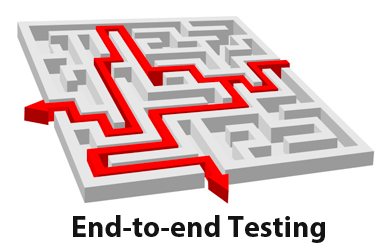
After these shorter tests are run, the following round will include Large tests. These are end-to-end tests that tests the functionality in many realistic use cases or even integration between different products.


Going a bit more into details, the execution times for these tests one year ago was around 10 hours for all Small and Medium tests. They were executed using physical machines and the system running them was TeamCity. Or actually the tests were ran for both x86 and x64 bit programs. number of tests was around 5k for each bitness.

The Large end-to-end tests took also 8-12 hours, but they had not been automated. Also the visibility to these tests was rather poor. They were executed by the system team, but the results weren't transparently available. The best way to know whether the tests were passing or not was to ask from some team member.


The radical change happened when build machines were virtualized. Instead of having a few high clock rate physical machines we ended up in having a set of servers which we filled with Hyper-V virtual machines. Number of processors was set to 8. We also made some modifications to run the tests in parallel (they were previously all just run consecutively). CI system was moved from TeamCity to Atlassian Bamboo.

Build times (or build + running tests) dropped  significantly. One thing we also learned was that virtualization platform makes a big difference. With all the same settings VMware was almost 20% faster than Hyper-V. Good thing is that both can be scripted nicely using PowerShell. We created VMware build machines with 16 logical processors.

During the same effort we managed to get also our Large tests to run in parallel in our continuous integration system. This wasn't as straight forward, because the framework used fixed file names and the test runs interfered each other. But in the end all the problems were resolved and we got the tests running automatically.


After the changes our build + Small & Medium tests now take 30-45 minutes depending a bit on bitness and other factors. Large tests are executed in about 45 minutes. So, for any change done to the codebase we now get the following phases:

  1. Changes are checked into continuous integration and compiled
  2. Small and Medium tests are executed.
  3. Large tests are executed.

In parallel with step 2 we have other builds that produce installer for manual testing. Build time is much shorter, so the test execution still dictates the build length.


Before our latest efforts the steps 1-3 would have taken almost 22 hours including some manual steps. Now they take around 1,5 h for any changes, things are fully automated and the results are transparently available for anyone anytime. Since nothing is ever enough we aim to go even further, but I think the current results are already worth a small celebration!

Aug 23, 2015

Tower of Hats

A few days ago I started thinking about all the different things I do at work. I have a main job, but in addition I do bunch of other things too. (This post is not about any Agile practices or management. If you are mostly interested in those posts, please feel free to stop reading now. But if you are interested to read how tall my pile of hats is, please continue.)

My main job is Manager, Software Releases. All the software that goes out goes through me. At least in theory. With 10+ teams it's sometimes a challenge. :)


I'm the Chief Scrum Master, owner of the Scrum framework (and how it's implemented in the company) and somewhat coach of our Scrum Masters. Fortunately I have another person who has recently started to assist me in this.


I'm the owner of the Release Process. How we package the software and use version control. This also means that I arrange release activities like planning, demo & retrospectives for all our products.

I'm the owner of Software Development Process and company wide Definition of Done. I try to come up with common conventions that allow us to have top notch code while still having creative freedom.


I'm the head of Release Team. We keep the infra structure in place and make sure build machines and version control work. Also we maintain other tools like JIRA and Confluence. I also pitch into this work, but I admit my team mates are more capable for doing that. And I'm actually really, really proud of that.

In addition to the supervisory duties I'm the Product Owner of the team. So I also get to prioritize the customer needs and bugs in the Backlog. With so many internal and external customers to serve I think it's a real handful.


I'm the owner of the Software Product Creation value chain. This means all the activities between having a customer need and actually filling those needs. SW Development and Release Processes are part of this value chain, but it also includes Issue & Configuration Management Processes and testing & development practices.

I'm a member of the Technology Unit's management team. We discuss unit's different matters with other Product Owners and country managers. Mostly the bigger decisions concerning the unit are done here. Actually I'm also the secretary of these meetings.


I'm an Internal Auditor. This isn't really a big burden since we don't have internal audits but couple of times a year. But it's interesting and offers a chance to examine other parts of the organization than just R&D.


During last strategy update I worked as the internal strategy facilitator. Mostly this meant making sure all work groups progressed. In a way it was really really educational. I learned tons of new things about the company and opened my eyes more to the business and long term goals.


I'm the substitute for Technology Unit head & also for the Quality Manager. Usually these things don't require any actions from me because the actual people are mostly present.

I'm a project manager for a Tekes funded research project DD-SCALE. Mostly I interact with researchers from Helsinki Univeristy or attend steering group meetings with all participants.

I think I'm still the vice shop steward. Haven't done anything regarding this in ages.

I'm a member of the company's leisure team. We arrange different activities for the employees in Finland.


I'm rather interested in the social media. I actually created the twitter account for the company and have been rooting for more external communication. How can the customers know about the cool new stuff if we don't let them know about them?


There. If I counted correctly, it's about 10+ hats or so. At least my head shouldn't get cold. Sometimes it just gets a bit dizzy for all the different responsibilities. But maybe this explains why I like to simply call myself the Jack of All Trades

Things I do on my spare time are out of scope. And too numerous to fit here. ;)


Jul 12, 2015

Loops of Learning

I'm currently reading a book about Organizational Patterns of Agile Software Development. In addition to the interesting patterns I was especially attracted to the chapter about anthropological foundations. The book also opened my eyes to see that processes alone are not enough. I've written about this before, but my view was reinforced once more.


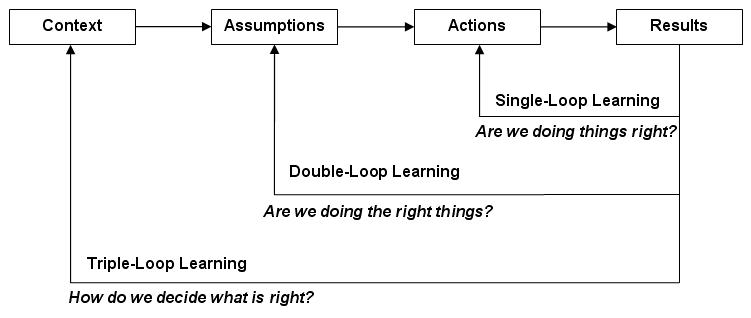
Continuous improvement with processes usually only deal with Single-Loop Learning. We inspect the results of our immediate reactions and then make corrections. Usually this is ok for a team that is building software in iterations. It's about following the rules. But when we go a bit higher, it maybe isn't enough anymore.


The second level, Double-Loop Learning was introduced to me by the Lean Startup book. In that method we still make small modifications as often as possible to learn fast, but we also can choose to either pivot or persevere. Do we want to keep on chasing the selected goal or should we select another target? Already this felt to me like something really awesome. Someone has even described the ideas of Lean Startup as possessing super powers. (I wouldn't maybe go that far, but it's a good book.) On this second level we create more insights about our actions. It can be also characterized as Systems Thinking.


But I wasn't aware, at least consciously, of the next level: Triple-Loop Learning until now. Jurgen Appelo writes about it in his blog post and Thorsten Gragert's wiki site offers a nice a summary including the below figure. The 3rd level deals with principles. In organizational context I'd associate it with company values and learning about learning.

Figure adopted from www.thorsten.org

By digging a bit more I found this article about Learning organizations. Interesting concept. They have the following five main features:
  • systems thinking
  • personal mastery
  • mental models
  • shared vision
  • team learning
I think I need to give this a lot more thought. And try to lead my organization further on this path. Maybe I will coin a term #BeyondAgile. :)

And finally, as a somewhat sidestep, I'll share a some tips I have spotted from many successful organizations:
  1. Dream big
  2. Hire the best people (who share your dream)
  3. Stay out of their way
  4. Share the success