I read Tom DeMarco's Slack and it made me question my own role as a process owner. The whole book seems to be somewhat manifesto against the sort of 'efficiency' that targets keeping everyone busy and also for management by objectives. The second one has been criticized ever since W. Edgar Deming, who I most relate with systems thinking.
In the end, Slack isn't against efficiency. At least that's my interpretation. It tries to make a separation between making individual parts (seem) efficient (busy) versus making the overall system efficient. I guess the lean approach would anyway consist of having enough slack to keep the flow smooth.
Another topic Slack points out is the culture of fear and how it can effectively prevent organizational learning. In a culture of fear organization you can not take time to learn new things. You always need to be efficient and busy. Inevitably this will keep people in their comfort zones because taking the time to try new things is just too risky. To transform such organization into a learning one you would first need to make people feel safe, cut off internal competition (between units or other silos) and give people enough slack for deliberate slower-than-expert training.
Slack got me thinking about process development. Just to keep in mind that busyness and effective value delivery are two very separate things. I sure hope it stays clear to me. Reminder from time to time doesn't hurt.
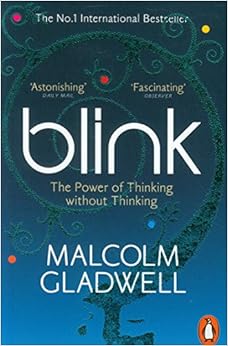
After Slack I started reading Malcolm Gladwell's Blink - The Power of Thinking without Thinking. It concentrates on our first impressions and thinking that we do unconsciously. I think it's very much related to Thinking Fast and Slow by Daniel Kahneman. (Now I realize that Gladwell wrote Blink six years before the other book. I just read them in reverse chronological order.) I analyzed Kahneman's book in my previous blog posts (here, here and here). Blink also supports the idea that we operate a big part of our day on an autopilot. Many of our choices are just too import to be left for our overanalyzing conscieousness. Instead they are made more efficiently, unconsciously.
Interestingly, we cannot tell how we end up with our unconscious choices. They happen 'behind closed door'. There are many studies that indicate that we don't have a clue. We can say we like this brand more than that, but usually the reasons are not known to us. And the setup of the experiment also matters. In short sipping test Pepsi usually wins Coke. But when you drink a whole bottle at home, you might change your selection. Or artist that you don't necessarily like after hearing a short sample might still be a huge success live.
Both books have been really enjoyable and worth reading. I can easily recommend both of them.
War stories about Agile implementation and scaling agility. My interpretation of Agile = applying common sense at work.
Showing posts with label thinking. Show all posts
Jan 7, 2016
Mar 16, 2015
Mental Learnings
In this post I try to summarize what I learned from the final part of Thinking Fast and Slow. I've already written two posts about the subject (here and here), but I still want to share something about it (also I can then later refresh my own memory about these things).
Two Selves
Our mind works in two modes. There's the experiencing self that sits at the drivers seat. Everything that happens, happens to this poor fellow. Then there's the remembering self. After experiencing self has done it's part, remembering self decides how the event will be remembered. And surprisingly, this remembering self makes most of the decisions regarding your future.
When we experience something, we don't really remember the whole event. If you for example think about your past work week or last summer holiday (for Finns that might be many weeks), you don't remember all of it. You remember some moments. And actually if you experience something for a longer time, you don't really pay attention to the length. These two things are called duration neglect and peak-end rule. The book offers painful operations as an example. Afterwards you can't tell if you were in pain for 60 minutes or 80 minutes.
Suppose you go through painful procedure that lasts 60 minutes. Then suppose you repeat the same experience, but after 60 minutes you get painkiller and the operation lasts for another 20 minutes. If participants in these two experiments were asked which one they would repeat, majority would select the latter one. Although this means 20 extra minutes of pain! Are they mad? No, remembering self just doesn't care about the length (nor apparently about the suffering of experiencing self...)
Tip for presenters: aim to have some neat moment in your presentation and try to end with a bang. You will be remembered. Unfortunately it's easier said than done. Here's my attempt from this year's Scan-Agile.
Although people are generally risk averse, there are times when they are willing to take risks. If you are faced with only bad options, you will take risks. Another case is lottery or some other possibility to get a highly improbable big gain.
On the other hand when you are almost sure you will get something (95 percent probability), you are willing to settle for something less if you can get it for sure. Who Want's to Be a Millionaire works like that. You can anytime walk away with some much smaller price. This price increases as you get further in the game. And the bigger the sure price gets, the less tempting it will feel to take the risk of losing everything.
Then an example about possible losses. People don't just buy insurances; they buy ease of mind. Even if there's only a very small probability that your house will burn down, you are willing to get an insurance against that.
Finally, the outcome of an event is not everything that matters. The previous state plays a big role too. If two people have equal pay today you shouldn't simply assume they are equally happy about it. The other one might have received a big salary raise recently. The other one might have been dropped from a higher position and hence suffered a salary cut. Probably the first one feels joy, but other one might be looking for a new job.
I've covered only some things from the book that I found interesting. There's plenty of more. I can truly recommend reading this book. It makes you see things differently.
Tip for presenters: aim to have some neat moment in your presentation and try to end with a bang. You will be remembered. Unfortunately it's easier said than done. Here's my attempt from this year's Scan-Agile.
Sure Thing vs. Gamble
People dislike risk in most cases. In lotteries, people prefer getting sure but smaller gains versus bigger ones with some risk included. But situation depends a bit on how you frame it. 90 percent survivability rate sounds good. 10 percent mortality rate doesn't sound that good anymore. And if you say that 100 persons out of one thousand WILL DIE, that sounds just super bad. Unfortunately we humans are not immune to these framing effects and political and jury decisions can be influenced bending the words properly.On the other hand when you are almost sure you will get something (95 percent probability), you are willing to settle for something less if you can get it for sure. Who Want's to Be a Millionaire works like that. You can anytime walk away with some much smaller price. This price increases as you get further in the game. And the bigger the sure price gets, the less tempting it will feel to take the risk of losing everything.
Then an example about possible losses. People don't just buy insurances; they buy ease of mind. Even if there's only a very small probability that your house will burn down, you are willing to get an insurance against that.
Finally, the outcome of an event is not everything that matters. The previous state plays a big role too. If two people have equal pay today you shouldn't simply assume they are equally happy about it. The other one might have received a big salary raise recently. The other one might have been dropped from a higher position and hence suffered a salary cut. Probably the first one feels joy, but other one might be looking for a new job.
I've covered only some things from the book that I found interesting. There's plenty of more. I can truly recommend reading this book. It makes you see things differently.
Jan 21, 2015
What You See Is All There Is
I continue reading Daniel Kahneman's Thinking Fast and Slow. There's so much food for thought that my reading is slow. But I'm learning a lot more about how our minds work.
Our intuition about statistics is terrible. And we tend to jump into conclusions after very small hints. Things that we have clear memories or that have an emotional factor are easily exaggerated. And availability and easiness of retrieval from memory also play a significant role.
After each plane crash people begin the question the safety of flying. Images of burning planes and lives lost come to our minds. They get a lot of media attention. This forms a vicious circle. Newspapers write about things that the crowd is interested in. And the more we read about these things the more we will get. But it doesn't change the fact that the probability of a plane crash is really small.
Our minds want to see patterns and purpose in our environment. We are not that eager or willing to pick our brain for real data and facts if there's a coherent story available. Linda problem is a classical example:
In many cases the form of the question and availability of examples you can (easily) think of also affect the result. Consider the following:
Unfortunately I see the effects in software developers. (Same applies also to police.) When they are constantly dealing with only the negative sides (sw devs with bugs and police with crime), they get blind to the positive sides. What you see is all there is. Even if you have thousands of users and only a fraction experience problems. But if that's the only contact with the customers then it's really hard to resist the conclusion.
I tried to draw two sets of objects. One contains only nice, clean and unbroken things. The other one also has some flawed ones. If seen separately, people would probably put a lower price tag for the second set. Although it does contain all the elements from the first set plus a few extra. Logically thinking the second set is more valuable.
In software business one can easily get carried away with this. From developer point of you all you see are things that should be either fixed or improved. But you might also possess a huge asset that customers love. Otherwise you wouldn't probably even be employed.
Our intuition about statistics is terrible. And we tend to jump into conclusions after very small hints. Things that we have clear memories or that have an emotional factor are easily exaggerated. And availability and easiness of retrieval from memory also play a significant role.
After each plane crash people begin the question the safety of flying. Images of burning planes and lives lost come to our minds. They get a lot of media attention. This forms a vicious circle. Newspapers write about things that the crowd is interested in. And the more we read about these things the more we will get. But it doesn't change the fact that the probability of a plane crash is really small.
Our minds want to see patterns and purpose in our environment. We are not that eager or willing to pick our brain for real data and facts if there's a coherent story available. Linda problem is a classical example:
Linda is 31 years old, single, outspoken, and very bright. She majored in philosophy. As a student, she was deeply concerned with issues of discrimination and social justice, and also participated in anti-nuclear demonstrations.
Majority of people select the second alternative. It fits to the mental image. But if you think about it, or create a Venn diagram, you will understand that the second alternative is a mere subset of the first alternative.Which is more probable?
- Linda is a bank teller.
- Linda is a bank teller and is active in the feminist movement.
In many cases the form of the question and availability of examples you can (easily) think of also affect the result. Consider the following:
List three things that you'd like to change in your co-workers.I was first going to ask about kids, but maybe this is easier. Well, it's not that hard to come up with three things. Boy, your colleagues must be really irritating. But let's try another one:
Give 15 examples of situations where your work environment didn't fill your needs.Hopefully that wasn't as easy. First couple of things probably came easy but then you started to slow down (assuming you kept on after that). The outcome of this would be that things aren't really bad after all. The easier things come to our mind the more probable we think they are. And vice versa. This is in many cases rather confusing and even contradictory. People who are asked to find big list of positive things about some subject they like end up being less impressed about it. Even though they now actually know it has so many positive things!
Unfortunately I see the effects in software developers. (Same applies also to police.) When they are constantly dealing with only the negative sides (sw devs with bugs and police with crime), they get blind to the positive sides. What you see is all there is. Even if you have thousands of users and only a fraction experience problems. But if that's the only contact with the customers then it's really hard to resist the conclusion.
![]() |
| How much would you bet for each of these sets in an auction? |
I tried to draw two sets of objects. One contains only nice, clean and unbroken things. The other one also has some flawed ones. If seen separately, people would probably put a lower price tag for the second set. Although it does contain all the elements from the first set plus a few extra. Logically thinking the second set is more valuable.
In software business one can easily get carried away with this. From developer point of you all you see are things that should be either fixed or improved. But you might also possess a huge asset that customers love. Otherwise you wouldn't probably even be employed.
Labels:
biases,
book,
brain,
probability,
psychology,
thinking
Jan 2, 2015
Two Systems
Priming
Apple, orange, grape.
Now fill in the missing blanc with the first word that comes to your mind:
_EARIt's pretty safe bet to say your word was pear. So (hopefully) I fooled you! Situation would have been different if I would have selected snakes, tarantulas and other poisonous things and pasted this picture instead:
What happened to you is called priming. Human mind is really complex, but within the last decades we have learned to understand it better. Or at least we have better theories.
Brains have an awesome pattern recognition machinery. The artificial neural networks in Computer Science are trying to emulate how our brains work. They can be used to 'teach' the network to handle varying input. Our brains operate the same way. We have our own personal history. All our experiences, good and bad, actually affects how our brains work.
As a rude generalization I could say that brains are organized around ideas. Each idea contains a huge load of information about the topic and those idea boxes get more content while you gain more experience in life. Different ideas are connected. For example fruit - pear - green could be connected. Or if you have seen only yellow pears then your brain probably has different content. :)
In these vast networks there isn't only path across all ideas. And if you see some things more often together, they become more close for you. If you always get food after hearing a bell, your mind will probably link those two things.
Interestingly, your mind and body are maybe even more connected than you'd think. If you force your mouth into a smile or frown, it will statistically alter your mood. Similarly nodding or shaking your head will affect how you relate to a information you hear. Or if you see pictures of money, it will make you more independent, yet selfish. Probably not a good idea spread pictures of dollar bills around team room...
Two Systems
Your mind has actually two separate parts. There's the lazy, rational controller who thinks he's in charge and then the fast autopilot.
2 + 2 = ?You didn't really calculate that. The answer just appeared in your mind. How about this:
16 x 27 = ?You know you could answer that but it feels laborious and you don't want to do it. It would require some mental effort. Daniel Kahneman has labeled these two systems as System 1 (controller) and System 2 (autopilot).
System 2 is actually feeding us stories all the time about what's happening around us and System 1 is most of the time believing it. The difficult part is to understand when the story isn't true.
Cognitive easiness resembles truth. Saying that 'Repeating lie long enough makes it true' isn't far from being correct. And marketing people have known this for a long time. But things can't be to far out, they need to close enough to being true.
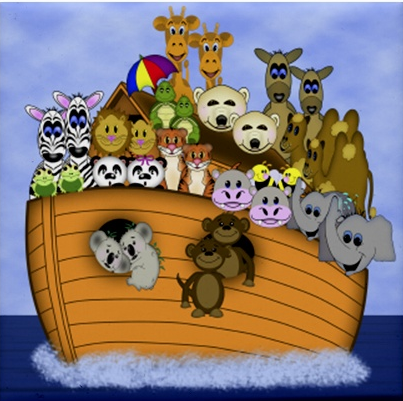
How many pairs of each animal did Moses take into the ark?
So sometimes we jump into conclusions without even being aware of it. Another noteworthy thing is that under strain the System 1 becomes almost blind. Check the experiment below. Stay sharp and concentrate on the white players:
While you concentrate of something mentally straining your pupils dilate. Also, you might need to stand still. (Have you ever been on the phone while walking and then you need to concentrate on getting the message through? At least I sometimes need to stop walking and think.)
All of this and much, much more you can read from Daniel Kahneman's Thinking Fast and Slow. If you are interested in how we (people) operate, I'd consider it a must read.
Side notes
As human brain extends and connects the ideas together, I'd like to also reflect how this information relates to what I've previously learned. Matthew D. Lieberman calls the two systems X-System and C-System. He actually has multiple references to Kahneman's work, so I guess it's good to read this one also.
David Rock (not personally) introduced me to the SCARF model. That already explains why we aren't so creative while being mentally strained. We can either fight or flight, but not innovate much.
Also this explains why I don't remember anything about conversations that I have while watching tv. And even more when I watch a movie that has subtitles. That's my brain saying "please return to the topic after the movie."
Labels:
book,
brain,
psychology,
SCARF,
thinking,
two systems
Subscribe to:
Posts (Atom)