Showing posts with label SCARF. Show all posts

Jan 2, 2015

Two Systems

Priming


Apple, orange, grape.


Now fill in the missing blanc with the first word that comes to your mind:
_EAR
It's pretty safe bet to say your word was pear. So (hopefully) I fooled you! Situation would have been different if I would have selected snakes, tarantulas and other poisonous things and pasted this picture instead:


What happened to you is called priming. Human mind is really complex, but within the last decades we have learned to understand it better. Or at least we have better theories.

Brains have an awesome pattern recognition machinery. The artificial neural networks in Computer Science are trying to emulate how our brains work. They can be used to 'teach' the network to handle varying input. Our brains operate the same way. We have our own personal history. All our experiences, good and bad, actually affects how our brains work.

As a rude generalization I could say that brains are organized around ideas. Each idea contains a huge load of information about the topic and those idea boxes get more content while you gain more experience in life. Different ideas are connected. For example fruit - pear - green could be connected. Or if you have seen only yellow pears then your brain probably has different content. :)
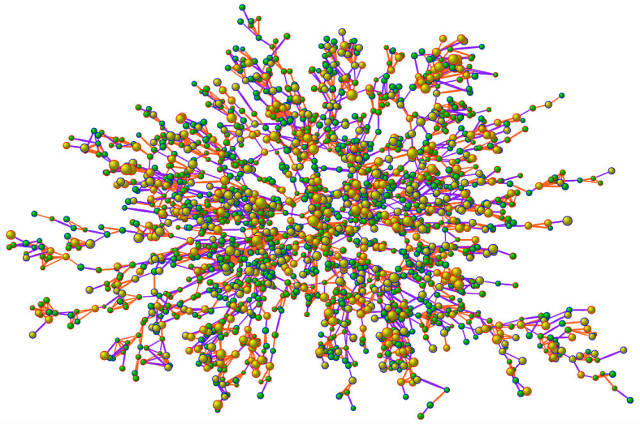

In these vast networks there isn't only path across all ideas. And if you see some things more often together, they become more close for you. If you always get food after hearing a bell, your mind will probably link those two things.

Interestingly, your mind and body are maybe even more connected than you'd think. If you force your mouth into a smile or frown, it will statistically alter your mood. Similarly nodding or shaking your head will affect how you relate to a information you hear. Or if you see pictures of money, it will make you more independent, yet selfish. Probably not a good idea spread pictures of dollar bills around team room...


Two Systems

Your mind has actually two separate parts. There's the lazy, rational controller who thinks he's in charge and then the fast autopilot.

2 + 2 = ?
You didn't really calculate that. The answer just appeared in your mind. How about this:

16 x 27 = ?
You know you could answer that but it feels laborious and you don't want to do it. It would require some mental effort. Daniel Kahneman has labeled these two systems as System 1 (controller) and System 2 (autopilot).

System 2 is actually feeding us stories all the time about what's happening around us and System 1 is most of the time believing it. The difficult part is to understand when the story isn't true.


Cognitive easiness resembles truth. Saying that 'Repeating lie long enough makes it true' isn't far from being correct. And marketing people have known this for a long time. But things can't be to far out, they need to close enough to being true.

How many pairs of each animal did Moses take into the ark?
Well how about that? One pair? Or did you remember that Moses didn't even build ark, it was Noah. But don't feel bad even if you fell into this trap. Most people do. Moses is also an old guy in biblical context. Your brain was destined to fool you. But if I had replaced him with Skeletor your alarm bell would have probably worked better.

So sometimes we jump into conclusions without even being aware of it. Another noteworthy thing is that under strain the System 1 becomes almost blind. Check the experiment below. Stay sharp and concentrate on the white players:


While you concentrate of something mentally straining your pupils dilate. Also, you might need to stand still. (Have you ever been on the phone while walking and then you need to concentrate on getting the message through? At least I sometimes need to stop walking and think.)

All of this and much, much more you can read from Daniel Kahneman's Thinking Fast and Slow. If you are interested in how we (people) operate, I'd consider it a must read.

Side notes

As human brain extends and connects the ideas together, I'd like to also reflect how this information relates to what I've previously learned. Matthew D. Lieberman calls the two systems X-System and C-System. He actually has multiple references to Kahneman's work, so I guess it's good to read this one also.

David Rock (not personally) introduced me to the SCARF model. That already explains why we aren't so creative while being mentally strained. We can either fight or flight, but not innovate much.

Also this explains why I don't remember anything about conversations that I have while watching tv. And even more when I watch a movie that has subtitles. That's my brain saying "please return to the topic after the movie."


Feb 13, 2014

Personal Communication and Decision Making

Individuals and interactions. Customer collaboration. I find it really hard to do that without meeting the other person. And if at all possible I prefer meeting them one on one. Or if that is not possible, I usually call using phone or voip. Why? Because it is so much more efficient than writing emails! ..or instant messages or anything else in writing.

I use such tools as JIRA, Lync and Flowdock quite a lot during my days. They are all great for asynchronous communication. And so is this blog post. But getting feedback for anything is a bit too slow to be really agile. Maybe one of the most frustrating features in instant messaging clients is to see that the other person is writing. Then you look at that and wait. If the other person has lot to say, you wait for a long time. But if you go and just have a quick chat it will all be done in no time. Simple and you get to do some nice human interaction also. I count it as a plus!


Well, you cannot always win. Sometimes the face to face conversations may not be pleasant. Sometimes you and the other person just disagree and there might be no getting past it. Or you need to give the other person some feedback that is not so easy to swallow. During those times I suggest just to focus on the facts. Don't get angry or frustrated, just deliver your message. Then you might want to let the other person to cool down before attempting anything mentally challenging. Because frustration simply blocks down our ability to think clearly.


Another interesting topic is the decision making. If I haven't totally misunderstood things, it's actually rather central topic in Agile. Empowering teams gives the teams (and individuals working there) power to make decisions. And thinking about it with some common sense, it does seem wise to do the decisions where the best knowledge is: in the teams. In Scrum the role of the Scrum Master is to remove impediments. A pending decision is an impediment. It's better to make a decision and move on than to waste time in pondering. So, Scrum Master can help facilitate decision making in order to keep team moving.


And I think the same principle applies when going "up in the food chain". Management should provide people with decisions. That's their job. Creating a better working environment through making decisions. Or empowering other people to make those decisions. But that's already a valid decision (and often a very good one.)

Finally I'd like to share this interesting link. Cult of Done. So simple yet so powerful! Starting things is easy. Anyone can do that. But what really counts is getting things Done! Finish starting and start finishing. Have working software as your only metric of progress. Done is the engine of more!


Nov 15, 2013

Scan Agile 2013

On November 11th I participated in the Scan Agile 2013. That's the biggest Agile conference in Scandinavia.
It was awesome! There were plenty of interesting presentations by different agile gurus. Brightest star was Dean Leffingwell who concentrated mostly on the Scaled Agile Framework (or shortly SAFe). Interestingly he was giving a lot of thought on XP practices. I had not realised they were such closely connected with the framework. I'm huge fan of both Scrum and SAFe and it was very inspiring to meet Mr. Leffingwell in person. As a matter of fact I was such a fanboy that I asked for his autograph. :)


(On the next day I participated in another session hosted by Nitor Creations where we sat around the same table. Discussion topic was Scaling Agile.)

There were four separate tracks and one could leap between the different tracks depending on personal preferences. The next talk I watched after Dean Leffingwell was by Arto Miekkavaara. He represented NeuroLeadershipGroup which is an organization founded by David Rock. I've been aware of the SCARF model for quite some time, but a little refreshment never hurts. 


Next I watched a presentation by Neil Killick. It was about the currently very popular NoEstimates. I have to admit that I didn't really understand everything about this. But the main deal seems to be that instead of estimating in non-dimensional Story Points that describe both the size and complexity, we aim to split the work into such pieces that are of same size. That way the number of stories becomes the measure of velocity. Interesting topic never the less.


Even if Leffingwell had the keynote, I think maybe the most inspiring presentation was given by Andrea Tomasini. Good stuff about the Anatomy of an Agile organization delivered with a great passion. Thank you Andrea, I really enjoyed your spicy speech!

Most of the other talks were about processes and frameworks, but Janne Sinivirta went deeper into the actual work. He educated the audience about Lean Architecture. Yes, I believe architecture is needed. (Maybe it's because I'm SAFe fanboy...)


As a conclusion I'd say Scan Agile is a conference worth participating and gathered a lot of familiar faces from different agile circles here in Finland. Again next year? If possible, yes!

In the near future I will keep on pushing the Agile transformation in our company. (Or maybe push is not the correct word. Coaching and collaborating on the issue would be closer to truth.) I will also need to try the role of a Product Owner. Kind of like a jump to the other side of the fence to see if the grass is greener there. Interesting times ahead!