Sep 17, 2026

Recap from Nordic Business Forum Day 2

I participated in the Nordic Business Forum 2026 in Messukeskus. I've never participated before, so this was quite an interesting experience. According to the organisers, there were more than 8500 participants which would make it the biggest business meeting event in the Europe. (Not sure how the comparison works, I've attended Slush and WebSummit which are both bigger, but maybe they are not considered business events.)

Sustainability 

Paul Polman, ex-CEO of Unilever, was talking about the 17 UN Sustainability Goals and how they could still be considered good business. As an interesting factoid, lifetime of publicly listed companies has shortened from 67 years (1920) to about 17 years (2020). Most of the time companies and countries are concentrating on treating the symptoms and not addressing the underlying issues. But as the human race, we spend more money in those than actually fixing those would take. He claimed that we are living the Age of Polycrisis and that the cost of not acting is currently bigger than not acting. He's checklist for how to be Net Positive:

  1. Take total responsibility
  2. Be science based
  3. Embed in strategy
  4. Stay consistent
  5. Deep collaboration 

1-1 communication

Alison Wood Brooks gave an interesting talk about communication. Conversation is a coordination game. She started off by acting as the conductor and making different parts of the audience hum different tones. Nice and memorable way to take the stage. My take away from the presentation was that people way too often overestimate understanding in communication. The conflict is big. In some research, more than 80% of people who communicated a message estimated that it was correctly received, but only about 40% of the receivers actually did understand. That's why it is really important to align and built the understanding. She presented the CALM framework:

  • Confirm understanding
  • Admit uncertainty
  • Learn
  • Make it human 

In the conversation, use open questions and a lot of follow-up questions. They keep the conversation going. Different question words score differently on the axis of how likable they are and how much information you can get with those. With Why-questions you can get a lot of information, but they often sound like accusations. How-questions are more neutral, but you don't get as much information with them. In this comparison, What-questions were seen as the top choice. And nicely enough, almost any question can be rephrased as a What-question.

What to avoid in conversation: don't boomerask. What this means, don't ask a question and when the other one replies, you immediately bring the conversation back to you. That way you really don't signal that you care about the other person's answer. By asking follow-up questions you can signal that you listen and care about the answers.

Incentives and M&A 

Then I listened to a few lightning talks. One about incentives. Main take away: options are a great instrument. If you are not using those in your company, you should. They are based on the company growth. If the people together make the company grow, they should be able to share the benefits too. And if the company doesn't grow, the options do not cost the company anything. Tip about bonuses was that instead of connecting them with the current numbers (that is often the case), the speaker adviced on connecting them with succes of some bigger things and projects that push the company forward.

Lightning talk about merges and acquisitions claimed that in most cases one-off M&A cases are not very great in short to mid-term. Usually within three years from the acquisition  they are still negative. But usually 10 years more positive. Instead of on-offs, companies that do a lot of acquisitions and have a proven blueprint for those are often successful. Because they are professionals and do not hesitate. The integration strategy should be done well in advance. And conversations started already during the negotiations. Culture and other, sometimes difficult topics should be discussed and when the two companies become one, it should be a mutual learning: how can we collaborate together in an efficient way. 

People practices 

Patty McCord, former chief talent officer from Netflix, had a really entertaining talk. Some main take aways:

  • Hire adults. 
  • Give them freedom and responsibility
  • Let them make decisions as long as they keep what's best for the company in their minds
  • Give them a lot of context
  • Results matter. This was true before, when the pandemic hit, and it is true now at the age of AI
  • A-players are those who get the stuff done. 
  • Give immediate (positive) feedback in the moment
  • Think 6 months into the future. Think where you and the company want to be. Think of making a movie out of it. What are people doing in it and how?
  • Kind of same, but think what goodness looks like. Then work backwards from it. 


Alignment 

The last keynote was from Oprah Winfrey. Her message was that through the more than 35k interviews she has done, everybody seeks validation. Every person is asking after the interview "Did you hear me? Did you see me? Did what I said had a meaning for you?" This is quite powerful conversational tip. She calls it the law of attention. In conversations you should seek alignment. Try to understand the intent behind people's actions. She stressed also the importance of internal alignment. What you say, what you do and what you are should all be aligned. Concentrate on how you make other people feel. Everybody should feel valued.

Generally about the event

This is a big event. Tickets cost quite a penny, so it naturally means many of the participants are decision makers. Or that they have done the math and want to have conversations with those decision makers. A good event also for people doing B2B sales.

I got my ticket from a colleague with a short notice so I had not prepared very well to the event. One could easily gain a lot more from this sort of event by spending more time in checking who are participating and arranging 1-1 meetings with interesting people. This is the part I totally missed. Maybe next time. 

From the presentations, many of those communication tips align with what I have heard before from many successful and respected leaders. The golden rule applies. Treat everybody well regardless of who they are. And do things well even when nobody is looking.

Jan 17, 2026

Adequate Introspection as a Growth Enabler

After some recent conversations with my colleagues, I'm more and more convinced that identifying and accepting flaws in one's own behaviour and skills is a big requirement for self-improvement. During my life I've met multiple people who tend to find the reasons for failures always from circumstances, environment or from other people. This might be a good psychological coping mechanism for safeguarding one's self-image, but it's also pretty bad for self-improvement. People who do not find anything to improve in their own actions rarely do anything to do things differently. Because why would they? It's the other people who should change.

Life is hard if you cannot trust others. 

This might also be related to trust. Probably it's not a good strategy to admit and advertise your weaknesses to people that you do not know well. They may use that information against you. That's why building trust is also key for unlocking personal and shared learning possibilities. 

As an example of how things could optimally go, let's think about a well functioning team. When people trust each other and are ok with showing their own vulnerability, they can expose ideas or plans to others and get feedback.When everybody knows that the team is building something together, it's no longer about individuals and their ideas. Ideas are criticised, bent and stretched and built on top of each other. When the best possible solution is found as a result of combined effort, everybody benefits from understanding it. And everybody grows and learns. This is the one of the biggest benefits of well functioning team.

 In a well functioning team people collaborate.

But everything starts with trust and safety. People need to be able to be vulnerable and tell if they do not know something. If they need to wear a psychological armor all the time, (working) life is hard. As a leader you can enable trust by leading by example. Trust others. Tell if you don't know. Ask seemingly stupid questions (that often are not that stupid. No-one else just dares to ask them.) Before you can trust others, you need to be in peace with yourself. And admit that if things that you participated did not go perfectly, maybe you need to do something differently next time.

Dec 14, 2025

The Risk of Unconventional Career Journey

Unconventional career journeys are risky

Often recruitment is numbers game and very staged. Recruiters are scanning through hundreds or even thousands of profiles and they have a specific criteria they compare those profiles against. Does the applicant have more than 5 years of experience in the craft? Have they been in supervisory role before? Have they managed managers? If any of the box goes without tick, in most cases they take the next application. 

Of course market situation also affects this, but if the company has got traction and there are enough applicants, this is how it goes. So without proper experience you don't even make it to the interview stage.

Box without a tick -> next applicant. 

There are less opportunities for generalists 

Because companies (and especially software engineering organisations) are traditionally built as they are, they follow this pattern: engineers (individual contributors) report to a team lead or engineering manager. These teams are then gathered into engineering departments, groups or tribes that are led by a director. Group of groups is then possibly called a unit and led by a vice president. The title for the highest ranked person depends on the company size, but could be "Head of", "Senior/Executive Vice President" or "Chief Techonology Officer".

When recruiters are filling these higher ranked roles, they are checking how the candidates have succeeded in the roles on the previous ladder. How successfully have they managed other managers or other directors? How long they have done that and in how many companies?

In this case people who have spent time in other functions (like being Product/Project Managers) or horizontal roles (like Agile Coach) have disadvantage. Their experience isn't immediately recognisable as beneficial for the role at hand. It's nice to have, but not fulfilling the requirements.

Sometimes the risk pays off 

There are roles that combine requirements from multiple crafts. Two possible mentions could be Product Engineer and Chief Product and Technology Officer (CPTO). Product Engineers are often people who are the first employees or founders of a tech startup. When you need to have someone who is able to think what the users need and turn that into a working application. With the latest advancements in AI and assistive technology, this might become more easy. If you have proper customer understanding and can explain it in words, tools like Copilot and Cursor can help you do the rest.

AI might change the game. 

CPTO role is another where two crafts come together. One needs to be knowledgeable about product management and be able to transform customer requirements into a roadmap and drive the implementation. Probably this role is more common in smaller companies, but could be considered also in bigger companies when a strong execution focus is required. And when the leadership team needs to be able to trust one person with the ownership of results. These roles can be opportunities also for generalists.

My story

Personally I feel like I stepped into the trap of being stuck on the generalist path for too long. I was once in a situation where I almost got to lead a department. I had carried out the organisational change, recruited the team leads and communicated what is going to happen. But then, when the new organisation was announced, I found myself somewhere else than in the head of this new department. Maybe the main learning was that one needs to be in really good terms with the decision makers in your 'homebase'. This is why I also see working abroad, far from the company headquarters, as a personal risk to anyone doing that. Out of sight, out of mind.

Don't forget to which organisation you report to. 

And I have had a bit too much agile coaching in my CV. People are offered positions that reflect what they have in their existing journey. Not what they are looking forward to doing next. That's why making a career shift is so difficult. If you want to do that, be prepared to take the long road. When you don't tick the previous boxes, (in most case) you won't stand a chance. 

Nov 8, 2025

Social Patterns: Sacrifice One Person

Sacrifice One Person 

Modern software development is mostly a team sport. Even with AI tools becoming more and more common, most companies organise their product development into teams that own specific parts of bigger software assets. And these teams can then have different ways of working and agreements. Social patterns (how to organise humans and handle communications) is not a new field of study.

I originally found these patterns from the book Organizational Patterns of Agile Software
Development by James O. Coplien and Neil Harrison. It was written in 1995, so exactly 30 years this year. 

Sacrifice One Person is a social pattern where one person from the team takes care of any small distractions that come to the team. This is something that probably many teams in different organisations have tried. I'll give a description of how that is done in the company I'm working in. 

Implementation 

The role is called Investigator and shifts are one week long. All team members are part of the rotation. The shifts affects only the working time, on call is handled by different people. Pagerduty application handles the rotation. It also alerts people if there's problem in their service.

One person answers, others continue work.

The Investigator shift is also visible in the calendar. Person who is one duty, has a full week calendar block that remind them and others that it is their turn. Every team also has a team Slack channel and if anyone needs help from the team, they can ping @Investigator. With this handle the person on duty will automatically be pinged and everyone else can continue their work.

Results 

When this social pattern is well adopted, it significantly decreases distractions and frees a lot of team resources to continue working on the normal backlog work. Without this pattern, probably the whole team would be pinged or the burden would concentrate on the few most senior individuals. By agreeing on the practices (for example that @Investigator pings need to be answered within agreed timeframe) it also improves the service level for internal customers. Because they have an agreed and supported way of getting reply to their questions and inquiries.

Depending on the amount of technical debt, wideness of team scope and size of the customer pool, Investigator shifts can also be stressful. Many teams have then agreed on supporting practices for their Investigators. There can be regular calls during the week or even two Investigators, if the expected weekly workload is very extensive.

With all the potential stress, many developers still seem to like the role. It is a chance for them to diversify their work and often learn something new.

This social pattern has been tried and proven to be useful. So I would highly recommend implementing something similar in your organisation. 

Apr 29, 2023

Migrating JIRA Cloud Project from one Site to Another

I have lately been trying and failing in trying to move (or copy) JIRA project from one site to another. One could think that this is so common use case that Atlassian would provide easy tooling for this. But based on quick Google search, this is not as straight forward as one would think. And hope.

The first instructions I found were based on making a backup of your site. Don't do that! If you try to import the backup, you will accidentally overwrite your whole JIRA instance. This only works if you want to bring the project(s) to an empty JIRA site.

But what does work, is the cloud-to-cloud migration that was still in beta when I tried it. With this approach I managed to bring individual cloud JIRA projects from other cloud instances to a common JIRA. In the following section I will tell how to do that and what potential pitfalls to expect.

Prerequisites

Cloud-to-cloud migration has some pretty heavy prerequisites, probably biggest of them being that you need to have Org Admin access rights for both the JIRA you are migrating from and for the receiving instance. I think this is pretty overkill. I hope in the future there would be some much lighter way of moving JIRA projects between sites. That would be possible with Trusted or Site Admin accesses.

Then you need to have the same Apps installed in both instances. This is good to keep in mind, especially if you have some costly ones in the original site. If you can, try to keep the set minimal. Keep it simple is a good rule.

Next, make sure you have same or similar enough custom fields in both instances. I failed my migration a couple of times because I had a validator in the original workflow that I didn't spot first that was relying on a custom field information. I had even trashed the custom field, but the reference was still left in the workflow. I would recommend simplifying your workflows before migrating.
 
Or putting the previous prerequisites into a simple list:
  • You need Organisational Admin access for both JIRA instances
  • You need same Apps installed in the receiving JIRA as in the original
  • Same Custom fields are needed in receiving JIRA
  • Check the workflows for validators. Keep it simple.
 

The Migration

Once you have done all the preparations, the actual migration should be smooth. For detailed instructions, check this link. In the original JIRA site, go to Settings > System > Import and Export > Migrate cloud site. Choose the receiving site (you will only see a list of sites you have Org Admin rights). Choose the projects you want to migrate. The conflict checker is very user friendly and helps you spot and clear conflicts before you try. If there's no conflicts, review and start the migration. Time it takes depends on the size of the project(s).


After the Migration

One thing that we noticed after the migration was that all users who were in the original project got site access to the receiving JIRA. They appeared as having site access, but no product access. In the user administration listing it also seems that these users would have received email invites, but according to Atlassian this is not the case. Never the less, I recommend removing their site accesses unless you intentionally want to give them access.

I hope in the future Atlassian provides a simpler tool for migrating individual projects between cloud instances. And with lighter access rights requirements. I think this must be quite common use case when companies evolve and merge.

Mar 29, 2023

Chasing Zero Bug Policy with a Three Strike Rule

Deal with Bugs Early

I claim that the best way to treat bugs is to deal with them fast. I call this the Zero Bug Policy. It means that anytime there's a new bug, development team fixes it as soon as they can. This minimizes the need of categorising bugs or spending time with bug backlog.

Unfortunately teams are often not in such a position that the amount of bugs is zero. Many would probably say that there is no such thing as a bug free software. At least software that has been developed for several years by multiple people and solves a complex real-world problem. Technical capability of the development team, culture, ways of working, staff turnover and many other factors contribute to the amount of bugs. Usually the more moving parts your solution and organisation has, the greater the chance that you will have existing bugs.

Then, assuming you are in a state where bugs have been and are piling up: how do you dig your way out of the situation? One way is to simply increase awareness. If having bugs has been the normal, you need to spend some energy to change the status quo.

Automate Your Way Out

I created a JIRA automation that implements so called Three Strike Rule. It runs periodically and has the following rules:

  • All bugs that are found that have not changed status in 30 days, are labeled with Strike1. 
  • All bugs that have Strike1 label and have not changed status in 30 days since, are labeled with Strike2
  • All bugs that have Strike2 label and have not changed status in 30 days since, are closed/some other action taken.

I have also used JIRA project components and the ability to assign bugs to specific component owners, in most cases team leads. This makes the issues more personal and encourages action. Unassigned issues can be more easily ignored.

Automatic closing of bugs should be seen as something that should be avoided as much as possible. If customer has reported a bug and you close it with some automated message, it most probably is not going to increase the customer satisfaction. But on the other hand, neither does leaving the bugs rotting in your backlog.


With this simple Three Strike action I've witnessed a big decreasing trend in the number of aging bugs. When the rule was first implemented, there were several aging issues, but since then the numbers have gotten lot closer to the Zero Bug Policy for almost all teams.

Jun 24, 2021

Kata as a method for Target-Oriented Continuous Improvement

Kata as a word probably first brings to mind the repetitious practice of moves in martial arts. And repetition is definitely the key in that learning process. First you learn the basics of how a punch or kick is delivered. Then, little by little, you get better. You can move faster, the moves follow each other more fluently, there's no need to think.

Photo RODNAE Productions from service Pexels

Kata can be applied also in many other things as a method of target-oriented continuous improvement. The form I will describe here was made popular by Mike Rother in his book Toyota Kata and further instructions to implement the method can be found in Toyota Kata Practice Guide.

First we want to understand where we want to go. What is our vision? This is needed as a north star. It can be something huge and far in the future, but it will help in directing our efforts to correct direction.

Then we definitely want to know that where are we now. What is the current condition? Most probably our current condition is far from our vision, but with the two points we can form a line.

Next we can try to define a meaningful target condition that would be in the direction of our vision. This one should be a bit more realistic to reach within a time horizon of at least couple of months. In enterprise setup the target condition could be at the end of a quarter or year half.


Once we know where we stand currently and have defined our target condition, we probably realise that there is something blocking us from advancing directly to the target. There are things that we don't know and uncertainties. We lack information. This boundary of information is called knowledge threshold. To widen the area of our knowledge and understanding, we can make experiments. Actually a lot of the process is about conducting these experiments. The next part is iterative.

  1. We formulate an experiment. Something that will help us increase our knowledge threshold.
  2. We list down our assumptions. What do we expect to happen.
  3. We conduct the experiment.
  4. We list down the results. What actually happened and how did the things go?
  5. We analyse the results, reflect and learn from the experience.
Actually those 5 steps are then repeated time after time. As a companion for our experiments we will greatly benefit if we can come up with good metrics to assess our progress. Otherwise it will be difficult to measure if we are actually getting closer to the target or further away from it.

Apr 9, 2021

Horizon 3 Development

The following post is not that directly concentrating on software development, but more in the early stage business development in B2B field. The learnings here seem to apply to domains that are a bit slow moving, like maritime and telecommunication. Maybe they can be applied more widely, but I have no first hand experience from others. Would be interesting to hear your thoughts if you have similar experiences from other business fields.

 McKinsey's three horizons is a framework for categorising businesses that are in different stages. 

Three Horizons

Horizon 1 (later H1) is a steady running mature business. One that is no longer growing much, but generates revenue steadily. Aim in this business is to maximize profitability. 

Horizon 2 (later H2) is growth business. It is not yet necessarily profitable, but the engine of growth has been found and there's a good product-market fit. Aim is to maximize the growth while there's still market left. At the later stage the goal is to make the business profitable a.k.a become H1 business.

Horizon 3 (later H3) is new business. Usually far from profitable, maybe even no customers at all. In this category useful metrics can be found from Lean Startup. In theory companies would like to minimize the time spent in H3 and skip this part with as little effort as possible and become an H2 business.

One can see similarities in the three horizons model and Technology adoption lifecycle model. The early adopters are willing to try new things and are willing to accept some 'children's deceases' in the products partially for the possible edge they can gain from the new innovation, partially for the sheer value of being seen as pioneers or forerunners.

Picture from S. Hermann & F. Richter from Pixabay

The Problem in H3

The problem is that one cannot advance from H3 to H2 without really having a solid, scalable solution. H3 customers might be willing to have a proof of concepts, co-develop or co-create a solution together with the solution provider, but usually customers at later stages are expecting more maturity. And there are two options: you build the basis for scalability while you are still seeking the product market fit with your H3 business or you are late and will have huge delivery pains at the beginning of your H2 journey.

Needless to say, the problem is not that trivial to solve. H3 businesses are usually startups or internal startups with limited resources and budgets. Time is their biggest enemy, because time equals salaries and other operational expences and with a long time to market you probably lose the opportunity window and some competitor gets the customers. The time constraint is the reason companies do sub-optimal design choices that result in non-scalable architectures. Instead of taking the extra time to do things properly, companies take technical debt. And when you reach the growth phase it might be really difficult to find the time to pay the debt back.

What to Measure

In my experience (B2B software development in telecommunication field), the biggest bottleneck is not software, it's customer access. The metric I propose to follow in H3 phase is how deep customer relationship you have been able to develop.

  • How many meetings you have had with different people in the customer organisation?
  • What are the roles and ranks of persons you have been interacting with?
  • How precise questions they have asked?
  • How well have you been able to understand the customer's business and identify the customer's painpoints and problems?
  • Are you able to provide them with something that helps them
    a) save money
    b) get more money
    c) help them do something they couldn't before

Picture by Mediamodifier from Pixabay
Deepening the customer relationship takes a lot of time. So does finding new customers. That's why testing your ideas might be really slow compared to working in B2C where you can more easily reach many customers (although I'm aware that it is nowadays really difficult to get consumers attention). Keep track of your progress and you are able to make decisions based on data!

May 16, 2020

Scaling Software Development

Software development is a team sport. It is true that even a single person can make huge contributions (like Linus Torvalds on Linux), but in most cases great results are produced by great teams. In this post I will concentrate on agile software development in a setup where own products are being made. I will try to tell how I would extend the team and what kind of tools or practices could be used.

Staffing the first team


Product Owner

Everything starts with an idea. A good rule of thumb is that there's a problem significant enough that it is worth solving. Before coding even a single line of code, make a hypothesis of the possible solution. Then validate it as fast as possible. For example Lean Startup practices might serve you in doing this. Having a Product Owner (PO) might be a good idea. PO can start collecting potential product feature ideas and requirements into a Product Backlog.

Architect

When you are pretty sure that you have an idea worth implementing and you start creating a team, maybe the first person to recruit is the architect. Someone who will have an overall technical vision about structure of the solution.

Coders

Next you probably want to add a few more coders to speed up the development. In the early phase of the product lifecycle it's tempting to divide the responsibilities so that there's a single person responsible for a part, but I would advise against doing so. It will limit the shared code ownership and most probably create bottlenecks. All parts of codebase should be familiar to more than one person.

Design and testing

Depending a bit on the case, next I would get a designer or a tester. If the solution needs to be operated by a user, I'd go with designer. If most of the magic happens in the backend and no-one cares how butt-ugly the product is, then first concentrate on making sure things work. Don't get a tester, but a person who is familiar with testing and can create automated tests. But testers think differently than coders, so better get one onboard.

Now you probably have quite standard software development team. Either get someone who has prior knowledge about agile software development to act as scrum/kanban master or select a person from the team that is most interested to learn the topic. With the help of this person the team will start an exodus to become a self-managing, self-organising cross-functional team that turns Product Backlog items into working software.

Scaling up


Splitting

Natural way to scale is to increase the team size by recruiting more and more coders and maybe domain experts. Once the team is so big that regular meetings like daily scrum are no longer efficient, it's time to start thinking about how to split the team.

When you split the team, think carefully how the new teams divide the responsibilities. Let the tech people decide what suits them best. When you have the second team, make sure that also contains all needed competences, including test automation.

Centralized competences

Some roles might not be needed full time in the development teams. It might make sense to centralize these to a different team that can support multiple dev teams. Architecture and design can be such skills that they can be in a common team.

When the work is divided between multiple teams it is also a sign that your operations need to raise to a new level of professionalism. It is a good idea to recruit someone to take ownership for the documentation. Security is also more important and maybe worth having someone concentrating on it. And since there are multiple teams (possibly) working on the same codebase, someone should spend a bit more time on setting up proper integration and deployment practice. Also it is worth thinking about how the teams coordinate and synchronize their work. Some scaling framework could be beneficial. For me Scaled Agile Framework is the most familiar. It also provides guidance on how to plan and execute things when you have multiple teams and also implement continuous improvement.

Get going

When you have recruited people to fill more than one development team and staffed another team has some centralized capabilities, it is time to plan how you shift the gear. This part requires a bit more effort on planning and discussion. I find it practical to have a person write down instructions that offer not too much, but enough details about how the new setup works. Then it is time to just agree on starting day and get going. Execute the initial plan, stop to reflect how did it go, adjust and repeat. That's how iterative and incremental practices work.

Tools

There are some tools that have become almost industry standard for supporting agile software development. Some tools have a lot of different features integrated to them and can handle a big part of the development pipeline. But I will give here an example of pretty traditional setup.

Backlog handling

For handling the Product Backlog, a pretty easy choice is Atlassian Jira. You can create and prioritise backlog items, track bugs and follow progress. If you are using Scrum, Jira offers possibilities for having burn down charts for your sprints. You can also easily visualise the workflow with kanban board and customize the columns to reflect your development process steps (like coding, code review, testing, etc.)

Version Control

The only version control tool that I would recommend is Git. There are multiple commercial tools that you can use that offer different additional benefits. Here are a few: GitHub, BitBucket, GitLab. Access rights control to the source code is probably the main thing, but maybe next in line is the possibility to use pull requests. Instead of pushing things straight to master you should consider a workflow that fosters shared code ownership and transparency. Code should be reviewed by someone else than the writer before merging.

Continuous Integration

Some Continuous Integration (CI) system will help you to automate your process. If the code needs to be compiled, the system will do it. In addition it can start the execution of automated tests, usually starting with unit tests. Some examples of CI systems are Jenkins, Drone, Bamboo, CircleCI, TeamCity and Travis.

Static Code Analysis

For static assessment of your codebase quality I would recommend adding a tool like SonarQube to your pipeline. It can help you measure how readable your code is and how good your test automation harness is. It will cover also security vulnerabilities.

Deployment 

Then you probably need some place to deploy your solution. Either you invest in hardware or you use cloud services. The most common public cloud platforms are AWS, Azure and Google Cloud. If you are using containers, you can orchestrate them with Kubernetes. If you can spend a bit more bucks, you can use an enterprise solution like OpenShift.

Documentation

Quite a standard way to build and maintain living documentation is through Confluence. Pages have version control and editing is very similar as in Wikipedia. They can be exported in multiple formats, such as pdf, word or html.

Possible pitfalls


Recruitment

If creating awesome applications and products that users love would be easy, everyone would do it. But it's not so simple. For starters, there's a shortage of skilled workforce. This means that people who know the craft also know their value. And since the whole world is getting digital, there are lots of companies that are willing and able to fight for the talent and offer high salaries and different perks. So, even if you can recruit a team, you might lose members because some other company 'buys them out'.

Culture

Another thing to understand is that the results that an organisation is able to produce are a lot more dependent on how well the people work together than how good the individuals are. It doesn't mean that you can achieve great results with mediocre people. But it does mean that even with highly skilled persons you can fail miserably if they don't get along. Culture makes a huge difference. If people feel safe to show their vulnerability and admit mistakes, everyone will benefit. With retrospectives and conscious continuous improvement efforts teams and teams of teams can raise to a whole new level of performance.

Edit 1: Added some sub-headers for easier navigation of topics.

Dec 28, 2019

Story about Software Lifecycle

This is a tale of a software lifecycle. It's fiction, but into what extent - I won't tell. It has been inspired by real events.

The Beginning 

About seven years ago a big consumer company wanted to renew their customer web portal. They didn't have own software development department, so they hired a team of external consultants for the task. Consultants came from two different companies. One was a smaller company with senior specialists. They did the architectural design. The other company was bigger. Already from the beginning the plan was that the bigger company would maintain the portal. Their developers were less senior, but the plan was that they would learn during the building phase.

The portal was a big success. It even won prices. When the intensive building period was over, the smaller consultancy company went to do other things and the other company began to maintain the portal. From now on I'll call them supplier (or team A).


For quite a few years everything went well. there was one person on the customer's side who was in close contact with the supplier. Supplier had a dedicated team and an architect/scrum master. New features were being built and things worked smoothly.

Maturity

Time passed. The customer relationship was so intense that at one point the architect needed to blow the whistle and take some time off. The person was replaced by another architect. The developers who were involved in the early phase were also in the early phase of their careers. And it is quite understandable that after a few years they wanted to do something else. Some changed roles, some went to work in other companies. If you are familiar with the job market in software industry today, you know that there are plenty of opportunities for skilled developers. People can easily vote with their feet. From maintenance point of view this is a real pain.

New people, who weren't familiar with the codebase, had a big struggle getting into productive mode. Without really rigorous attention to architectural quality, software tends to get more complex and more difficult to maintain. And when this is combined with staff turnover, the overall architectural picture gets lost.


Unfortunately, when there are no senior members in the technical staff, the balance between business and technological needs gets disturbed. Business grieves features and visible things. For the business, development speed (how many new features you get with x amount of money) and performance (how quickly things happen when you click) are relevant. What happens behind the scenes is not. The development team should speak out for the technological needs.

There's a dependency between development speed and codebase complexity. With low automated test coverage and high coupling, introducing new changes is always a potential source of unwanted regression. But for a person observing the development from the outside, this simply appears as slow and costly development that produces poor quality.

Back to the story. The customer didn't want to spend so much on the maintenance and so the supplier scaled down the size of the development team. Or the team size was kept about the same, but they were working for another customer. Organizational changes happened on both sides, with the customer and with the supplier.

The customer was unhappy with the development results and felt that they needed to take a tighter control. Team was heavily micromanaged. Daily scrum meetings turned into reporting and command and control sessions. The development team didn't like this and it accelerated the staff turnover even more.

The Renewal

The supplier had seen that it was getting very difficult to find people who were familiar with the technology. Without consulting the customer, they made a plan how to renew the portal to current technology. The benefit would be that there was much more skillful labor available in the job market and that the development speed would increase dramatically. The software architecture had deteriorated into a big ball of mud, but by applying certain changes, the user interface could be separated.


Due to the understandable lack of trust, the customer had hired an external consultant to aid them in technological decisions. Actually this person was also one of the people who originally participated in making of the original portal. Thus he knew it well and didn't see a need for changes. The supplier was trying to push the idea, but things got postponed. After six months, the supplier had hired a technology guru who could fluently demonstrate how the changes could be implemented. It changed the customer's mind. The plans were the same, they were just presented smoothly by a charismatic person.

When the renewal project finally got green light, the customer insisted that there would be a "dream team" working on it. There would be team members from the supplier (let's call them team A) and team members from the other smaller company (let's call them team B). Architect and scrum master were appointed from the smaller company and the customer acted as the project manager. Customer strongly demanded that the development should take place on site, in team B's premises. 

Before the actual development started, there were planning meetings where the plan was discussed, argued and fought over. Architect from team B questioned all design decisions that came from team A. During this period both the technology guru and the most senior developer in this new technology resigned. They had made their decisions about how fruitful the co-operation between the companies would be and didn't want to live in continuous argument.

Team A had had a team lead who was the main contact between the customer and the supplier. But for this project the customer said that they didn't need his services, since the customer's own representative was managing the project. Team A also had an architect, but he was stripped of his power, since the achitect was appointed from team B. During all this time, team A was still contractually responsible for the portal.

Teams didn't collaborate that well and the project fell into crisis. Even though there had been numerous planning sessions before the project started (that were mostly used for arguing), the plan regarding the user interface was still rather abstract. Stories had not been refined and for example the styleguide for the whole site was only one story. The work estimates were too small, since they were given by more senior people than who were left in the team.

The End

The team lead, who wasn't needed for guiding the project, resigned. This wasn't communicated with the customer. Soon the whole renewal project was cancelled. The customer made a decision that they would end their contract with team A and team B would maintain the portal in the future.


Learnings

There are probably quite a few things to learn from this and mistakes were made in many occasions. But here are at least some takeaways:
  • Pay attention to technical quality. Feature development is important, but without proper code and architectural caretaking software will rot over time.
  • Technologies have lifecycle too. I dare you: try to find COBOL or Smalltalk developers. Make a plan for renewal early enough.
  • You catch more flies with honey. If you want people (your own employees or suppliers) to walk the extra mile, treat them properly. Collaborate rather than command.
  • Or from the supplier perspective: if you are faced with a challenging customer relationship, add a buffer role into the interface. Some people might even enjoy the challenge.
  • Don't pit suppliers against each other. Rather insist that they collaborate.
End note: Hopefully the story made you think. If you see events around you that resemble this story, be careful. It's never too late to change the direction ...until it's too late.


Photos by Ariel Besagar, chuttersnap, frank mckenna, Matt Botsford & Filip Mroz on Unsplash

Apr 21, 2018

Value Stream Mapping SIPOC

I was this week in a workshop where we were introduced to a nice set of lean tools. 5 x why, fishbone and kano model were visited briefly, but most of the time we concentrated on value stream mapping. To share the knowledge I will tell you about it in more detail.


We used SIPOC model. The abbreviation comes from the words
  • Suppliers
  • Inputs
  • Process
  • Outputs
  • Customer
In this example we were creating a breakfast toast for one of our family members. So customers in this case were husband/wife or child.

Outputs can differ if the different customers (or customer segments) have different needs. In our case the child wanted a toast with jam and special attention that the toast isn't burnt. Spouse wanted a cheese sandwich and all the facilities need to be cleaned. No crumbs.

Inputs are all the things we need in the beginning. In the toast example we need a plate, knife, jam, cheese, butter, bread (two different types) and heat.

All the inputs have a supplier. In this case we were thinking where in our kitchen they are located. Not really who made the knife. But the knife is in drawer, butter and jam in the fridge. Heat is provided by the toaster and plate in the cupboard.

Finally, when these pretty evident things are covered we can start to think about the process. WHAT activities are needed in order to create the desired outcomes? We first make a line of post-it notes that define the activities. We can label the different activities with different colors. In our case we used green for processing, yellow for transportation, blue for storage and red for inspection.


Each WHAT phase is broken down into HOW parts. For example toasting phase can be broken down into activities of setting the temperature, putting the bread into the toaster, setting the toaster on and the bread being heated.

We used heart shaped post-its to mark all the value adding phases. In any process there are activities that add value, activities that are necessary but not value adding and thirdly activities that are waste. By identifying these we can measure how much of our activities actually are value adding compared to the whole time used. This performance indicator is known as Value Added Ratio (VAR) or Process Cycle Efficiency (PCE).
PCE = Customer Value added time / Process Cycle Time
As in our example the spouse explicitly wanted to have no crumbs, we tracked all the parts where crumbs could be produced. These phases were connected with a string. This way we can only concentrate on improving those parts to minimize the amount of crumbs.

Finally it makes sense to identify your customer touchpoints. You can goof off in many parts (well, better not to too much..) but you should make sure that you handle the customer touchpoints with care. Think about what happens before, during and after the touchpoint. How does the customer feel?

There you go. A crash course to value stream mapping using SIPOC method. If you want to learn more, I encourage you to find a lean consultant or simply try it out. I know I will.


Apr 7, 2018

Leadership

A person starts to lead when she takes responsibility of something greater than just herself. Before this, she needs to learn to lead herself. This means she needs to take responsibility and make a decision to sit on the drivers seat. It is quite easy to blame someone else when something goes wrong. It takes courage to admit that I had the choice, I made the decision and it turned out to be wrong. But it's a necessary step towards leadership.


Leader should be vulnerable. Admit your mistakes. Say you are sorry. Ask other professionals for guidance and be willing to change your opinion when you see better facts and hear better arguments.

Don't try to be something you are not. Even if you have a few rough edges it might be better to show them than act. People can see through facades. But if you are rude, it still might be wise to polish your manners.

Empathy is a core leadership skill. But even empathy can be learned. Think about how your actions affect others. Or, better yet, ask them! And listen to the answers.


One dilemma in leadership is that many believe in leading by example. I do so too. But in expert organization that isn't usually a choice. The people in your team are better in their craft than you. So another leadership style kicks in: stay back and let other people shine. Support them. Clear obstacles from their path. And boost their confidence by telling them how much you respect them.
Inhale blame, exhale credit to others.
I'll open this up. You are the leader. You take the blame. Period. It doesn't really matter what happened, it can be discussed later (and should be analyzed with maybe 5xWhy?), but right there in the moment when shit hits the fan you take the blame. No excuses. Then, when the dust settles, you stop for a while with your team and have a retrospective. You learn and you try to make sure the same doesn't happen again.


And the credit part. When something great is achieved it is usually a group effort. Leaders many times get to represent others in events, but when positive feedback is given, make sure you remember that it is for the team. Thank them. Thank them in public. And celebrate the successes in private too. Raise toasts or have a bun together. (bun intended)


All pictures from Gratisography.

Mar 25, 2018

Resilience

I was recently in a one day refresher training about coaching leadership. About one and a half years ago the original training was longer, couple of months. It included lots of assignments and pair learning with my supervisor colleagues. The training was organized in house and participants came from different departments of my company. Actually, this was one the most powerful takeaways from the training: I got to meet and network with people who work in very different environments. But we all have something in common: leading people is our day job.

Our everyday realities differ. It's diffrerent being in sales or in the frontlines of customer service than in the R&D or doing software development project work. But in the end, for leader the goal is same: your job is to help your team members succeed.

Photo by jesse orrico on Unsplash

The training was implemented in such a way that there were numerous pair and group conversations. One topic was resilience, the ability to overcome a disruption (for example an organizational change). With a quick poll it seemed that almost all participants thought that they were very resilient. They were able to work under stressful conditions and stay sharp. Afterwards I began to think that
Is high resilience a precondition for a successful leader?
But which way does the causality work? Was it a precondition or had these people become more resilient after being in the management position? Maybe worth researching a bit more.

At least it would be a benefit. That in today's stormy waters (of corporate life) you can stay calm. But it's not only about you. Since even if you can get over things quickly, others might take longer. And if you forget this, you may move too fast.
  • Give your people time to adapt. 
  • Offer them opportunities to discuss and reflect. 
  • And use your gift of keeping your head clear to help others.

Photo by Dane Deaner on Unsplash

Jan 25, 2018

Developers - Cost or Asset?

When things get big enough there might be functional silos that concentrate on specific activity. These could classically be something like sales, development, support and marketing. Of course these functions should be made as efficient as possible taking into account the whole. Customer value is usually built in co-operation between all the functions, not by a single unit.

Metrics can be a double-edged sword, if they are applied to functions instead of taking into account the whole value chain. Sales funnel is quite easy to quantify. You have numerable amount of possible clients. You can count how many units you can sell to this market, thus getting the absolute limit value for your cash inflow. It's easy to measure how much a single sales person or sales unit can close deals and bring in money.


If you sell development hours, it's also quite easy to measure how much a developer generates turnover or how big the billing rate is.

In typical cases salaries are even easier. There's usually a fixed sum of money that is paid to the person monthly. This is the cost of a developer (plus hardware & licenses too).


But it’s much more difficult to quantify the financial benefit of an in-house developer who works in R & D. One could make a rough estimate about how much an equivalent consultant would cost. But this doesn’t take into account the subtle knowledge that is accumulated over time or the internal relations. Possibly this person is the glue that keeps the team together, the humorist that keeps people in high spirits or the oil that lubricates the internal cogs and makes things happen. Not impossible, but difficult to quantify.

Without visibility and understanding, one can draw wrong conclusions about the situation. Classic would be rewarding sales department for bringing in the money and cutting costs in operations by sacking people.

"What should I do then?"
To remedy the silo problem and optimizing parts in expense of the whole, you should concentrate on metrics that measure the whole value chain and are difficult to gamble. Some examples:

  • NPS. How the customer experienced your service?
  • Lead time. How long it took your organization to meet the customer’s need?
  • Profitability. Do not concentrate on (just) how much sales you make. Pay attention to how much it costs for you to develop, deliver and market the product/service.  


 Photos by "My Life Through A Lens", Spenser H, Fabian Grohs and Mike Wilson on Unsplash.

Jan 15, 2018

Employee Turnover and How To Avoid It

In the current market situation, software development professionals are the ultimate scarse resource. I'm not exaggerating if I say that these people, for example talented architects or data scientist, don't need to look for positions. They are being actively approached by headhunters and hiring managers.

They are neither easily replaceable, like cogs in a machine. Usually they possess knowledge that has been accumulated over a long period of time. Into some extent this information is useful in other environments, but it's most valuable in the current setup. That is why the existing employee is most valuable to their current company.

The cost of employee turnover

Losing a member from a well welded team has a significant cost that can be divided into (at least) the following parts:
  1. Team loses a member and thus his/her direct contribution.
  2. Team needs to reorganize and learn to function without the lost member.
  3. Recruitment takes time away from development.
  4. When the new team member is found, he/she needs to be oriented and inducted.
  5. Team needs to reorganize again to function with the new member.
Sadly, I feel that many times people only think about the first bullet. And maybe if there's been difficult recruitments, also the third one. But all of these have a cost.

For the above mentioned reasons companies should do all possible efforts to keep their employees happy. I understand this is not possible for all company roles and it might be viewed as unfair. But it's really as simple as the law of demand and supply. With the rise of banks and other companies digitizing their services the demand is bigger than ever. (Almost) all companies are becoming software companies. And there's rather limited supply of software engineers.

Few tips on how to keep your employees

Compensation is one parameter in the puzzle. It should be on a decent level, but it isn't everything. Benefits that either have monetary value or make the life easier also count. I think the latter ones are more effective in retaining employees. Generally people are lazy (at least I am). Autonomy in choosing your own tools and ways of working increases happiness. If your work has a higher purpose or meaning to the society, it's a plus. For people who work with their brains, right amount of challenge is expected. And finally, you should be able learn new things.

There's a cost for keeping your employees, but usually it's smaller than losing them.

Nov 24, 2017

Walking Through a Process

I've recently started working part-time as an internal tutor in my organization. I could best characterize the tutor pool as having internal (agile) coaches available for different continuous improvement activities. Main focus is on process improvement and facilitation.

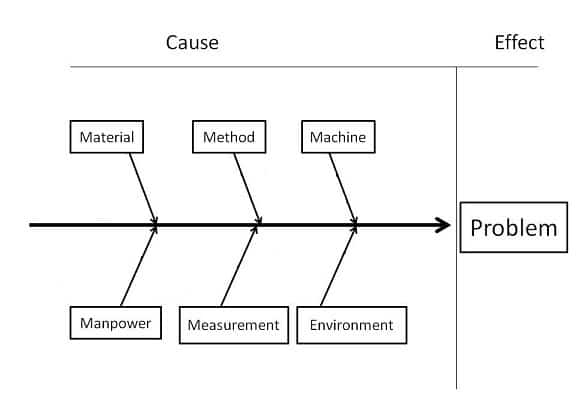
I think the tools and techniques are quite sophisticated. If you are familiar with Lean, you probably know the fishbone and 5 times why. This time me and my colleague facilitated a process walkthrough using the OPERA technique. We scheduled a three hour time slot for the event.

Fishbone

As we are both really new tutors, we went through the exercise before with our mentors. The person responsible for the development of the particular process was also involved in the preparations. The ultimate goal was to update the whole process. But for our session at hand we set our goal on better understanding the current status.

My colleague had done a very good script for the session with timings. We started with a short introduction (15 minutes). The participants also listed their expectations for the meeting. All the expectations were surprisingly well aligned: more understanding about the current status.

In OPERA technique people first write down their own ideas (O) on post-its. Everyone was instructed to write 3-5 things that currently work and similarly topics that could be improved. For this we gave them 10 minutes.

Time-Timer

Next, the participants paired up (P) and discussed their ideas with their pair. For this we gave them 15 minutes. If you visualize the passage of time, people can self manage their timing and you don't need to hurry them. If you can get your hands to a Time-Timer, that's great, but if you don't have one available, you can use for example Online Stopwatch. The countdown works well and you have an alarm in the end.

After the pair work, we collected the ideas on the whiteboard and the pairs explained (E) their findings to the others. For this phase we had reserved 35 minutes. In addition to positive findings and improvement topics we also had a category for ideas.

After collecting the ideas on board we discussed possible themes that could be identified. In 'by the book' OPERA we would have had ranking (R) and arrangement and actions (A), but in our case we pretty much skipped those.

Opera, not OPERA

From the results we crafted a sort of hypothesis for what the current status was. To test this hypothesis, we needed to go check things in practice. In Lean, you would use the principle Genchi Genbutsu or do a Gemba walk. In our case we will examine the current status by interviewing the process actors.

We had done a lot of ground work with the interview questions, so this part didn't take long. But if you start from scratch, be prepared to spend considerable amount of time on this. With a predefined set of questions you get better data can identify patterns from the answers.

The interviews will take a lot of time, but during the meeting we decided who were going to be interviewed and the team split into pairs. Scheduling the interviews were left as an action point and we only agreed on the deadline date. We will have another workshop session when the interviews are done and we can look at the results together.

Oct 14, 2017

SAFe Evolution

I have been involved with SAFe for about five years now. We first started by taking inspiration from Dean Leffingwell's Scaling Software Agility book. Then we bumped into the SAFe big picture. I think it was something like version 2.1 back then. There were still HIP-iterations in the end (H stood for hardening) and the model was talking about Potentially Shippable Increments and Releases.

SAFe 2.5, Leffingwell LLC

Originally I fell in love with the simplicity of having on one level sprints and on another über-sprints. We were building new releases of our product a few times a year and wanted to speed up. Also, we were having quality issues due to scope extensions and schedule slippage. Our story has been presented in this case study.

Version 3.0 made it more clear that we don't have a separate value stream for architecture and business. I guess it was also due to popular demand that the hardening was dropped from the end of the release period. I still think it was quite realistic and would be for an enterprise that is new to agile. Things don't become fully automated over night. I became certified SAFe Agilist during the 3.0 version.

SAFe 3.0, Scaled Agile Inc

I had mixed feelings about version 4.0. I was really happy to see the Customer in the big picture for the first time, but adding yet another layer (Value Stream level) seemed like too much. That was probably mainly due to the fact that I weren't involved in such activities where so many layers would have been needed. In a way, I think it would be possible to add even more of these levels. After all, we are talking about scaling.

SAFe 4.0 was very handy when you hid the Value Stream level. Of course you need to make decisions based on economics in all cases and you want to apply agile architecture, but you can do it even if you don't have it in the big picture. Communities of Practice were also a welcome addition. You probably want to have some support groups for people who serve in similar roles. That's how you can benefit more from organizational level learning. During the 4.0 era I got certified as SAFe Program Consultant (SPC4.0).

SAFe 4.0, Scaled Agile Inc.

As with previous changes and additions, the new version SAFe 4.5 brings both welcome additions and things that seem to be added mainly because they are current hype. The ability to customize your big picture: Essential, Portfolio, Large Solution or Full SAFe is really good thing. I bet many companies can do with Essential or Portfolio SAFe. But it's a good thing that the more complex versions are available too.

SAFe 4.5, Scaled Agile Inc.

Then what I don't really like (this is my personal opinion), is the fact that SAFe is getting more bloated. I think in the core things are about scaling, cadence and transparency. The power triangle that makes a distinction between content, process and technical quality authority (PO, SM & Team or PM RTE & Architect). I see no need to add DevOps practices, Lean UX nor Lean Startup practices here. They are fine practices that I appreciate and use. But for example in teaching Leading SAFe course, they make things more complicated. Also, due to the fact that the slides covering those aspects don't really include much of instructor notes, I kind of feel those topics are still in an early phase.

Special rant from many of my trainees: THERE ARE WAY TOO MANY ABBREVIATIONS! MMF, WSJF, CoP, FAB, RTE, STE, CoD, CALMR, MTTR, WIP, CI, CD, CE, BUFD, MBSE, KPI, ROI (...maybe you get the point). Some of these are industry standards, but if you bump into these for the first time during your Leading SAFe class, you have quite a mouthful.

As an end note, I feel SAFe 4.5 is great, but there should be a clear separation between the core practices (regardless of configuration) and such additional practices that simply underline that SAFe is a collection of different IT industry best practices. Which it clearly is.